When the Mind Refuses to Stay in One Place
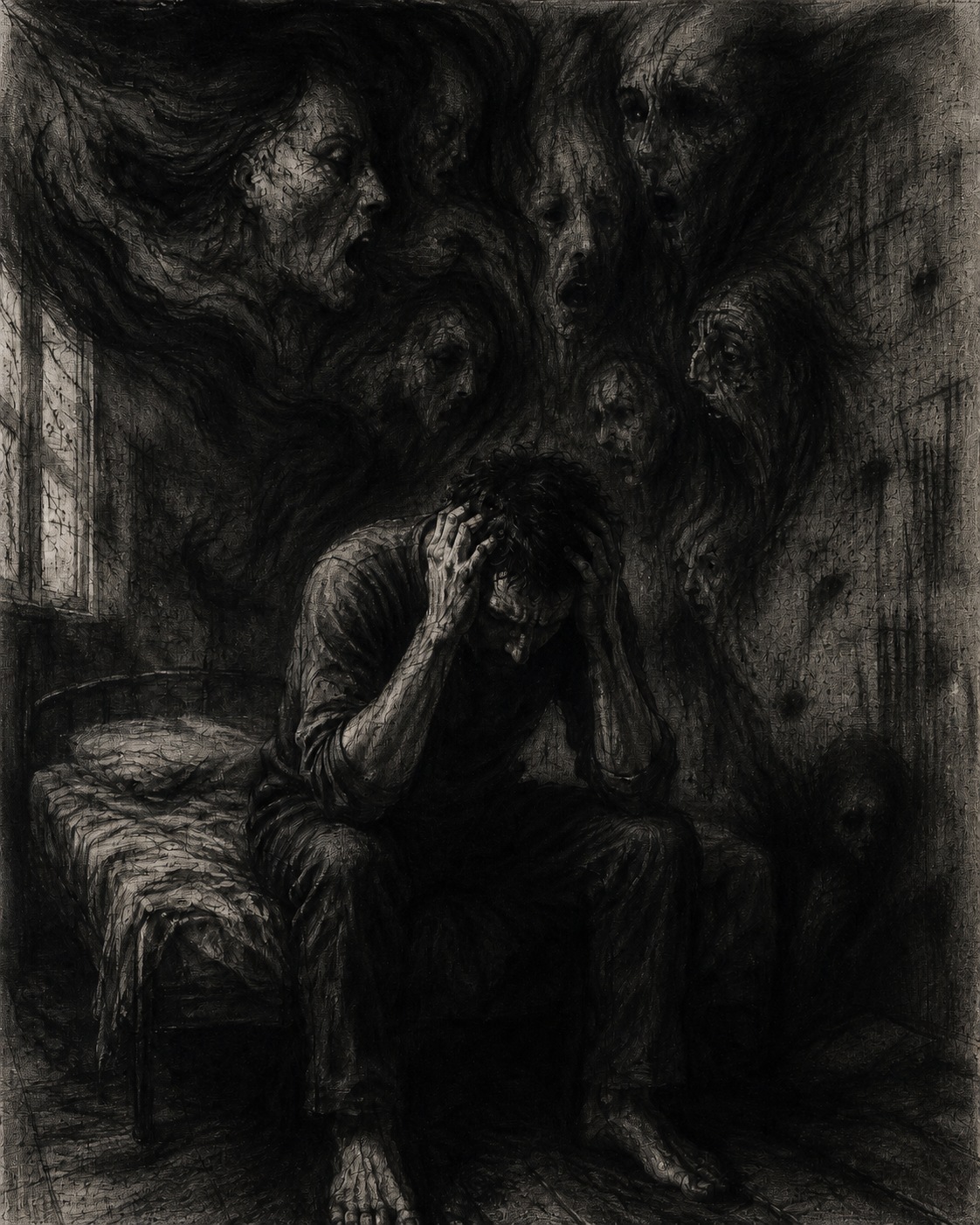
Depression does not always kick the door open. That would be too honest of it. Many days it enters like damp through a wall in an old Calcutta room, one faint stain first, then a smell, then a whole geography of gloom quietly spreading behind the almirah.
Today it came through loneliness, worry, and discomfort.
Not tragedy. Not thunder. Not some grand operatic collapse where I clutch the balcony railing and the violins behave like they have been personally insulted. Just ordinary things. The room too warm. The body slightly wrong. The mind too empty in one corner and too crowded in another. The phone silent except for advertisements, bill reminders, news alerts, and other tiny mosquitoes of modern life.
This is how depression cheats. It does not always say, “You are sad.” That would be manageable. It says, “This is the truth.” It takes a lonely afternoon and turns it into a lifetime certificate. It takes one unpaid bill and makes it look like a biography. It takes a body that needs rest and announces, with the confidence of a corrupt local official, that the whole man is finished.
And the worst part is that the voice sounds like mine.
That is the small private horror: I do not have a stable relationship with my own mind. Some people wake up and their mind is a reasonable clerk. It opens files, stamps papers, says, “Tea first, then work,” and lets the day proceed. My mind is sometimes that clerk. On other days it is a committee meeting in a leaking municipal building where everyone is shouting, nobody has the correct file, and one ceiling fan is making a sound like a dying helicopter.
A mind like that is not romantic. It is tiring.
People outside it often say cheerful things. Go for a walk. Think positive. Be grateful. Do yoga. Drink water. Make a plan. All good advice in the same way that “build a bridge” is good advice when you are standing on one side of a river wearing slippers and holding a plastic bag full of vegetables. Correct, yes. Immediately usable, not always.
Because depression is not only a thought problem. It is also a body problem, a sleep problem, a money problem, a memory problem, a room problem, a weather problem, a loneliness problem. A man is not a floating brain in a glass jar, though some days the internet seems designed by people who believe this. A man is a stomach, a spine, a bank account, a chair, a fan, a past, a future, and a cup of tea gone cold beside the laptop.
The body matters more than we admit. A bad night’s sleep can turn a small worry into a courtroom drama. Heat can make the soul feel badly installed. A sour stomach, a sticky shirt, a noisy neighbor, a chair that attacks the lower back like a minor criminal—these things do not look serious from outside. From inside, they become evidence. Depression collects evidence the way a nosy para uncle collects gossip: selectively, eagerly, and without a trace of mercy.
Loneliness does the rest.
Loneliness is not just the absence of people. It is the absence of interruption. Nobody comes in and says something foolish. Nobody asks where the scissors are. Nobody complains about the price of tomatoes. Nobody distracts you from yourself. And when a person is alone too long, the mind starts chewing its own shirt collar. It manufactures news. It opens old cases. It brings up mistakes from 1998 with the freshness of breaking news.
Meanwhile the real news goes on shouting. Markets rise, governments perform their usual circus tricks, artificial intelligence promises to change everything except the price of fish, and somewhere in the city a man is bargaining over coriander with more confidence than I have in my future. This is the peculiar comedy of being alive. The world continues to fry onions while your inner life is burning down a small shed.
I am fifty-one. That number has a sound. At twenty-five, sadness feels like weather. At fifty-one, it starts carrying a file. It asks what you have done, what you failed to do, who stayed, who left, what money is coming, what work remains, what will happen if the mind slips again. A younger man can sometimes outrun these questions. A middle-aged man has to sit across from them and pretend the plastic chair is comfortable.
But here is the catch.
A depressed mind is not always a reliable witness.
It may speak loudly. It may speak with grammar. It may even produce impressive arguments, complete with old memories, financial charts, emotional footnotes, and that special gloomy music it keeps in the cupboard for special occasions. But loudness is not truth. Fluency is not truth. The mind can be eloquent and still be wrong.
That does not make the suffering fake. It makes the interpretation suspect.
This is important. Pain is real. The story pain tells may not be.
Today the pain says loneliness proves failure. Not necessarily. Loneliness may prove only loneliness. Today the worry says uncertainty means disaster. Not necessarily. Uncertainty may mean only that tomorrow has not yet shown its face. Today discomfort says the body is betraying me. Not necessarily. It may simply be asking, with poor manners, for rest, food, water, medicine, air, or less doom-scrolling in a half-lit room.
Small distinctions. Large consequences.
I do not need to win the whole war today. That is too much cinema. I need to avoid becoming the enemy’s stenographer. I need not write down every cruel sentence the mind dictates. I can let some of them pass like political slogans from a loudspeaker van: noisy, repetitive, not legally binding.
So the work becomes modest. Almost embarrassingly modest.
Wash the face. Make tea. Eat something that did not come only from anxiety. Open the window. Move one object from the bed to the table. Reply to one message, not ten. Sit near light. Do not make a lifelong judgment while the nervous system is behaving like a goat trapped in a tin shed. Let the day become smaller. A day can be carried. A lifetime cannot.
This is not inspirational. Good. Inspiration often behaves like cheap perfume in a crowded bus. Too much, too quickly, and no real help. I prefer the humbler truth: sometimes survival is not a heroic climb. Sometimes it is not adding extra poison to an already bitter cup.
Do not insult yourself.
That may be the first task.
Not love yourself. That is advanced work, like repairing a ceiling fan while it is still rotating. Just do not insult yourself. Do not join the prosecution. Do not call one low day a verdict. Do not confuse a chemical shadow with moral knowledge. Do not let depression sit in your chair, drink your tea, and issue government orders in your name.
I am still here. That sentence is not decorative. It has weight.
Still here, in the sticky heat, with worry at the edge of the bed and loneliness standing near the window like an unpaid visitor. Still here, with a mind that will not always sit properly but has not yet left the room. Still here, not victorious, not cured, not shining like a motivational poster in a gym, but breathing, noticing, naming the trick.
A flickering bulb is not darkness.
It is a flickering bulb.
And sometimes, in a room like this, that is enough light to find the cup.